
Coeur Mining, Inc. is a well-known player in the precious metals mining sector, with operations primarily focused on the exploration, development, and production of gold and silver. For investors, understanding the factors that drive the performance of Coeur Mining Stock is essential to making informed investment decisions. This article will explore the key elements that influence the stock performance of Coeur Mining, covering aspects such as market trends, operational efficiency, financial health, regulatory environment, and macroeconomic factors.
The prices of gold and silver are significant drivers of Coeur Mining Stock performance. As a mining company that produces these precious metals, Coeur Mining's revenue and profitability are closely tied to their market prices. Several factors influence gold and silver prices:
Economic Uncertainty: Precious metals are often seen as safe-haven assets. During times of economic uncertainty or geopolitical instability, investors flock to gold and silver, driving up their prices.
Inflation: Precious metals are a hedge against inflation. When inflation rates rise, the value of fiat currencies tends to fall, making gold and silver more attractive investments.
Interest Rates: There is an inverse relationship between interest rates and precious metal prices. Lower interest rates reduce the opportunity cost of holding non-yielding assets like gold and silver, leading to higher demand and prices.
Coeur Mining's operational efficiency and production output directly impact its financial performance and, consequently, its stock price. Key factors include:
Mining Production: The amount of gold and silver produced from Coeur's mines affects its revenue. Higher production volumes generally lead to better financial performance.
Operational Costs: The cost of mining operations, including labor, energy, and equipment, affects profitability. Efficient operations with lower costs can improve profit margins.
Technological Advancements: Adopting advanced mining technologies can enhance productivity and reduce operational costs, positively influencing stock performance.
Investors closely monitor Coeur Mining Stock's financial health to gauge its stock performance. Key financial metrics include:
Revenue and Earnings: Consistent revenue growth and profitability are positive indicators. Quarterly and annual earnings reports provide insights into the company's financial health.
Cash Flow: Positive cash flow from operations indicates that the company can sustain its operations and invest in growth opportunities without relying heavily on external financing.
Debt Levels: High debt levels can be a concern for investors as they may indicate financial risk. Coeur Mining's ability to manage its debt and maintain a healthy balance sheet is crucial.
Coeur Mining's exploration and development projects are vital for its long-term growth and stock performance. Successful discovery of new mineral reserves and the development of new mining projects can significantly boost investor confidence. Key aspects include:
Exploration Success: Discovering new gold and silver deposits can increase the company's mineral reserves and future production potential.
Project Development: Efficiently bringing new projects into production can enhance revenue growth. Delays or cost overruns in project development can negatively impact stock performance.
Geopolitical Considerations: The location of mining projects can affect regulatory risk, operational stability, and costs. Investors generally view projects in politically stable regions with favorable mining regulations positively.
The mining industry is heavily regulated, and changes in the regulatory environment can impact Coeur Mining's operations and stock performance. Key regulatory factors include:
Environmental Regulations: Tight EHS, especially in developed countries, can raise the cost of compliance, not forgetting the efficiency of operations. On the other hand, beneficial regulations can decrease operation obstacles.
Permitting Processes: The accessibility of required permits regarding exploration, development as well as production may also determine project duration and expenditure.
Tax Policies: Alterations to one's tax regulations that can be inclusive of rates of mining royalties and company taxes, impact the earnings.
Another equally important fact about Coeur Mining Stock is that it is not immune to the general influences of the global macroeconomic environment. These include:
Global Economic Growth: Growth of fortuitous or oriented economies in the global market can cause consumption of precious metals that shall see prices rise, hence propelling mining companies.
Currency Exchange Rates: This is due to the fact that precious metals may be priced in US dollars, and changes in exchange rates have a way of influencing revenues. Therefore, there is a positive relationship between the gold and silver prices and a weaker dollar.
Commodity Prices: Costs associated with the operations of the firm include the prices of key inputs like energy and raw materials. The high cost of manufacturing implies higher prices of inputs, which are incorporated into the manufacturing of commodities, thus affecting profitability.
Last but not least, the outlook of investors and the perception of the market have the most profound impact on Coeur Mining Stock's price. Factors that shape investor sentiment include: Factors that shape investor sentiment include:
Analyst Ratings: It concluded that analysts' recommendations and ratings influence investors and the stock price.
Market News: Many factors influence the mining and stock price performance, including positive or negative news on Coeur Mining, any mining company, or any news affecting the overall market.
Stock Market Trends: The Coeur Mining stock may be impacted by common industry trends, including general market risks, investor risk appetite, and changes in the sectors that are preferred.
The future performance of Coeur Mining's stock is influenced by a number of variables that depend on the company's external condition, such as the market in precious metals, efficiency, financial position, prospecting and development results, legal framework, macroeconomic climate, and investor sentiments. Such insights will help investors to have a better evaluation of investing in Coeur Mining stock by establishing the drivers for its prices. Like any investment idea, one should do their homework and weigh the pros and cons of Coeur Mining before making an investment decision.
Hecla Mining Company (NYSE: HL) has long been a prominent player in the mining sector, particularly in precious metals. With a history dating back to 1891, the company operates primarily in silver, gold, and other base metals. But with fluctuating commodity prices and a dynamic market environment, the question on many investors' minds is: Is Hecla Mining Stock a good buy?
Hecla Mining operates in North America, with significant assets, including the Greens Creek Mine in Alaska, the Lucky Friday Mine in Idaho, and the Casa Berardi Mine in Quebec. The company's focus on silver and gold, combined with its strategic acquisitions, positions it as a significant player in the precious metals sector. In recent years, Hecla has aimed to enhance its operational efficiency and expand its resource base, making it an interesting candidate for investors.
Analyzing Hecla Mining's recent performance involves examining key financial metrics, stock trends, and operational updates. The Hecla Mining Stock has experienced volatility, which is typical for mining companies due to the sensitivity of commodity prices. For instance, the Hecla Mining Stock surged during periods of high silver and gold prices but faced downward pressure when commodity prices fell.
Historical Trends: Hecla Mining's stock price has seen significant fluctuations over the years. For instance, in early 2023, the Hecla Mining Stock experienced a notable upswing driven by rising precious metal prices and positive operational updates. However, it also faced downturns when market conditions shifted.
Valuation Metrics: As of the latest data, Hecla's Price-to-Earnings (P/E) ratio is relatively low compared to industry peers, suggesting it might be undervalued. The Price-to-Book (P/B) ratio also reflects a discount compared to historical averages, which could indicate a buying opportunity for value-oriented investors.
Revenue and Earnings: Hecla's revenue has shown resilience, driven by its mining operations and strategic asset management. The company reported improved earnings in recent quarters, though margins remain subject to fluctuations in metal prices.
Debt Levels: Hecla has managed its debt reasonably well, with a debt-to-equity ratio that is in line with industry norms. However, high leverage can be a concern, especially in volatile markets.
Cost Management: Hecla has been working on improving its cost management strategies, which is crucial for maintaining profitability amidst fluctuating metal prices. The company's efforts to optimize operations and reduce costs have had a positive impact on its margins.
Production Metrics: The company's production levels for silver and gold have been stable, with incremental increases in output from key mines. However, production efficiency and cost management are critical for sustaining profitability.
Several external factors influence Hecla Mining's stock performance, and understanding these can provide insight into its investment potential.
Silver and Gold Prices: Hecla's profitability is closely tied to the prices of silver and gold. Historical data shows that the company benefits from higher metal prices but suffers during downturns. Recent trends indicate that silver and gold prices have been experiencing volatility, influenced by global economic conditions, inflation rates, and geopolitical uncertainties.
Inflation and Interest Rates: Inflationary pressures and rising interest rates can impact mining stocks. Higher interest rates could lead to increased borrowing costs for Hecla, while inflation may affect operational costs and consumer demand for precious metals.
Global Economic Conditions: Economic slowdowns or growth can affect commodity prices and, consequently, Hecla Mining Stock performance. For instance, economic uncertainty or recessionary periods could lead to lower demand for metals.
Environmental and Regulatory Compliance: Mining companies face stringent environmental regulations and compliance requirements. Hecla's ability to navigate these regulations efficiently can impact its operational costs and overall performance.
Hecla Mining's strategic initiatives play a significant role in its long-term investment potential.
Strategic Acquisitions: Hecla has pursued business development activities such as acquisitions to broaden its resource base and operations. Acquisitions made in the recent past have been meant to add value to the competence of the production system and the resources. Therefore, it becomes possible to assess the success of these acquisitions together with their effect on the firm's growth opportunities.
Cost Reduction and Efficiency: Proper process management, the use of new technologies, cost minimization, and Hecla's priority operations are especially important in maintaining competitiveness. These factors are favorable for investors with an interest in the company since they depict the firm's endeavor to update its operations and enhance productivity.
Volatility: Hecla and other mining Hecla Mining Stocks always face the risks of oscillations in their prices as a result of the volatility of the market prices of the commodities undermining. Investors should be ready to face fluctuations in the price and economic instabilities.
Regulatory Risks: Environmental and mining laws and policies affect cost factors and the viability of a project.
Undervaluation Potential: Relative to historical value measures, indicators currently show that Hecla may be relatively lowly valued. This may provide a value buying opportunity for the firm's value investors.
Long-Term Growth: However, if Hecla is able to continue controlling costs, acquiring more valuable assets, and dealing with market volatility, then Hecla can be a long-term growth Hecla Mining Stock.
Depending on the individual investment plans, risk appetite, and the market conditions then, Hecla Mining Stock can be considered as a good buy. The current position and some of the financial ratios indicate mixed signals, but there is room for the stock to do well in the future, given the current strategic direction. Thus, particular risks concern Hecla Mining as a company, and they are connected to the company's dependence on the fluctuations in the prices for commodities and potential changes in the legislation; at the same time, specific opportunities related to the company's emphasis on increasing operating capacity and expansion through acquisitions.
The key point is that like any other investment, thorough research and analysis of the possibility of gaining or losing are imperative. If investors are willing to take risks and work in the fluctuating price environment, Hecla Mining's stock may be interesting to them because of its connection to precious metals.
Hecla Mining Company offers investors a compelling opportunity to participate in the dynamic world of precious metals. Founded in 1891 and headquartered in Coeur d'Alene, Idaho, Hecla has established itself as a leading producer of silver, gold, lead, and zinc with operations primarily in North America. This article provides a detailed analysis of Hecla Mining Co. Stock, covering its historical performance, financial analysis, market position, strategic initiatives, risks, and considerations for prospective investors.
Hecla Mining Company's longevity and expertise in the mining sector underscore its resilience and strategic vision. The company operates mines in key mining jurisdictions such as Alaska, Idaho, and Nevada, contributing significantly to regional economies and the global metal supply chain. Hecla's commitment to operational excellence and sustainable mining practices has solidified its reputation as a responsible industry leader.
Hecla's historical performance reflects its ability to navigate through the cyclical nature of commodities markets. The company has demonstrated robust financial health, characterized by consistent revenue growth, operational efficiency improvements, and disciplined cost management. Key financial metrics such as profitability margins, cash flow generation, and debt management highlight Hecla's strong financial footing and ability to generate shareholder value over the long term.
In recent years, Hecla has focused on optimizing operational efficiencies through technological advancements and strategic investments in exploration and development. This approach has resulted in improved production metrics, enhanced profitability margins, and strengthened competitive positioning in the market.
Within the mining sector, Hecla Mining Company occupies a strategic niche due to its diversified asset portfolio and operational scale. Competing with multinational mining conglomerates and specialized producers, Hecla distinguishes itself through its regional expertise in precious metals extraction and commitment to environmental stewardship.
The competitive landscape includes companies with global reach and extensive resource bases. However, Hecla's focus on high-quality reserves and sustainable mining practices provides a competitive edge, particularly in North America's stringent regulatory environment.
Looking forward, Hecla continues to pursue strategic initiatives aimed at expanding mineral reserves, optimizing operational efficiencies, and advancing exploration projects. The company's investment in technological innovation, including automation and digitalization, enhances operational reliability and productivity, positioning it favorably to capitalize on future commodity price trends and market demand.
Hecla's proactive approach to community engagement, environmental sustainability, and regulatory compliance underscores its commitment to responsible mining practices. By focusing on long-term value creation and sustainable growth, Hecla aims to mitigate operational risks and enhance shareholder confidence in its strategic vision.
Despite its strategic advantages, Hecla Mining Company faces inherent risks associated with commodity price volatility, geopolitical uncertainties, and operational disruptions. Fluctuations in metal prices can impact revenue streams and profitability, necessitating effective risk management strategies, including hedging and operational flexibility.
Moreover, regulatory changes and environmental considerations pose ongoing challenges to mining operations, requiring proactive compliance measures and sustainable development practices. Hecla's ability to navigate these risks while maintaining operational continuity and stakeholder trust remains critical to its long-term success and investor appeal.
For prospective investors evaluating Hecla Mining Co stock, several key considerations emerge:
Market Dynamics: Understanding global commodity price trends, supply-demand dynamics for precious metals, and macroeconomic factors influences investment decisions.
Financial Performance: Analyzing Hecla's financial metrics, including revenue growth, profitability margins, cash flow generation, and balance sheet strength, provides insights into its operational efficiency and financial resilience.
Strategic Vision: Assessing Hecla's strategic initiatives, exploration pipeline, and capital allocation strategy offers visibility into future growth prospects and shareholder value creation.
Risk Management: Evaluating risks such as commodity price volatility, geopolitical uncertainties, regulatory compliance issues, and operational disruptions informs risk-adjusted return expectations.
Environmental, Social, and Governance (ESG) Factors: Considering Hecla's commitment to sustainability, environmental stewardship, community relations, and corporate governance practices aligns with responsible investment principles and long-term sustainability goals.
Technological Advancements: Hecla's ongoing investment in technology, including digitalization and automation, not only enhances operational efficiencies but also reduces environmental impact and operational costs, thereby bolstering profitability and sustainability.
Exploration and Resource Expansion: Hecla's aggressive exploration efforts and strategic acquisitions aimed at expanding its mineral reserves and diversifying its asset base provide long-term growth potential and resilience against market fluctuations.
Market Demand and Supply Dynamics: Analyzing global trends in industrial demand for precious metals, particularly silver and gold, and Hecla's ability to meet this demand through its diversified portfolio and operational flexibility can provide insights into future revenue growth and market positioning.
Capital Structure and Financial Flexibility: Evaluating Hecla's capital structure, debt levels, and access to capital markets provides insights into its financial flexibility and ability to fund growth initiatives and navigate economic downturns.
Corporate Governance and Leadership: Assessing Hecla's corporate governance practices, board composition, and executive leadership team provides confidence in the company's management and its ability to execute strategic initiatives effectively.
Market Analysts and Investor Sentiment: Monitoring market analysts' recommendations, investor sentiment, and institutional ownership of Hecla Mining Co stock can offer insights into market perceptions and potential future stock performance.
Industry Trends and Regulatory Environment: Staying informed about trends in the mining industry, regulatory developments, and geopolitical risks that may impact Hecla's operations and financial performance is crucial for making informed investment decisions.
Hecla Mining Company presents a compelling investment opportunity in the mining sector, characterized by its operational excellence, diversified asset portfolio, and strategic growth initiatives. As investors evaluate Hecla Mining Co stock, a thorough analysis of historical performance, financial metrics, strategic direction, risk management practices, and additional factors such as technological advancements, exploration efforts, market dynamics, and corporate governance will facilitate informed investment decisions aligned with their financial objectives and risk tolerance.
In summary, Hecla Mining Co stock offers potential upside driven by its robust operational capabilities, strategic focus on sustainability, and commitment to long-term value creation. For investors seeking exposure to the mining industry's opportunities and challenges, Hecla represents a resilient player poised for future growth and shareholder value enhancement, underpinned by its strong market position and proactive approach to industry challenges.
HyCroft Mining Corporation, a prominent player in the mining industry, has garnered significant attention from investors seeking exposure to commodities like gold and silver. This article delves into the company's recent performance, market outlook, and key factors influencing HyCroft Mining Corporation Stock forecast.
Founded with a focus on responsible mining practices, HyCroft Mining Corporation operates primarily in Nevada, a region renowned for its rich mineral deposits. The company specializes in the exploration, development, and production of precious metals, particularly gold and silver. With operations in the heart of the United States' mining sector, HyCroft aims to capitalize on rising commodity prices and increasing global demand.
In recent quarters, HyCroft Mining Corporation has demonstrated robust financial performance amid favorable market conditions for precious metals. The company's revenue growth has been buoyed by higher commodity prices, especially gold, which reached multi-year highs in response to economic uncertainties and inflation concerns. Additionally, HyCroft's strategic investments in operational efficiency and cost management have bolstered its profitability metrics, reflecting positively on its financial health.
As of the latest financial disclosures, HyCroft reported a steady increase in production output, supported by efficient resource utilization and streamlined extraction processes. These operational improvements have not only enhanced profitability but also positioned the company favorably within the competitive mining landscape.
Looking ahead, HyCroft Mining Corporation's stock forecast hinges on several key factors shaping the global mining industry and commodity markets. Analysts and industry experts anticipate continued volatility in precious metal prices, driven by geopolitical tensions, macroeconomic indicators, and shifts in investor sentiment. Moreover, evolving regulatory frameworks and environmental sustainability practices are likely to influence operational strategies and cost structures within the mining sector.
HyCroft's expansion plans and exploration initiatives are integral to its growth trajectory. The company's ongoing investments in resource development and expansion projects aim to capitalize on untapped mineral reserves, thereby enhancing production capacity and revenue streams. These strategic endeavors underscore HyCroft's commitment to long-term value creation and sustainable growth amidst fluctuating market dynamics.
Despite optimistic market sentiments, potential risks and challenges persist for HyCroft Mining Corporation and its stakeholders. The inherent volatility of commodity prices poses a significant risk to revenue forecasts and profitability margins. Furthermore, operational disruptions, regulatory changes, and geopolitical uncertainties could impact production schedules and financial performance.
Investors should also monitor HyCroft's debt management strategies and liquidity positions, particularly in the context of evolving interest rate environments and capital market conditions. Effective risk mitigation strategies and prudent financial management are imperative for safeguarding shareholder value and maintaining investor confidence.
In addition to financial performance, HyCroft Mining Corporation places a strong emphasis on environmental and social responsibilities. The company adheres to stringent environmental standards and community engagement practices, aiming to minimize its ecological footprint and foster positive relationships with local stakeholders. Such initiatives not only enhance HyCroft's corporate reputation but also mitigate regulatory risks and support sustainable operational practices.
Furthermore, HyCroft continues to leverage technological innovations and operational efficiencies to optimize its mining processes. Investments in advanced technologies such as automation and data analytics enable the company to improve productivity, reduce operational costs, and enhance safety measures for its workforce. These technological advancements not only drive operational excellence but also position HyCroft competitively within the global mining industry.
HyCroft Mining Corporation's strategic partnerships and market positioning also contribute significantly to its growth prospects. Collaborations with industry leaders and local stakeholders enhance access to resources, technological expertise, and market insights, thereby strengthening HyCroft's competitive advantage and market resilience.
Navigating the regulatory landscape is crucial for HyCroft Mining Corporation's operational continuity and growth sustainability. Compliance with local, national, and international regulations ensures operational legality and minimizes legal risks, fostering investor confidence and long-term stability.
Examining HyCroft's financial position and capital allocation strategies provides further insights into its growth prospects and investor appeal. The company's balance sheet strength, cash flow generation capabilities, and prudent capital expenditure decisions are critical factors influencing its ability to fund expansion initiatives, manage operational risks, and enhance shareholder value over the long term.
HyCroft remains committed to innovation in sustainability and operational efficiency. The adoption of renewable energy sources, water recycling technologies, and responsible waste management practices not only aligns with environmental stewardship goals but also enhances operational resilience and cost-effectiveness.
Analyzing HyCroft's competitive landscape and market dynamics provides context for its strategic positioning and growth potential. Understanding industry trends, competitor actions, and market demand-supply dynamics helps investors assess HyCroft's ability to capitalize on market opportunities and navigate challenges effectively.
Given its operations in Nevada and potentially expanding globally, HyCroft must navigate geopolitical risks. Factors such as trade policies, international relations, and geopolitical tensions can impact regulatory environments, operational continuity, and market access. Robust risk management strategies and scenario planning are essential to mitigate these risks effectively.
HyCroft's exploration and development pipeline are critical indicators of future growth potential. Monitoring the progress of exploration projects, resource estimates, and development timelines provides insights into HyCroft's ability to expand its asset base and sustain production levels over the long term.
In conclusion, HyCroft Mining Corporation stock presents a compelling investment opportunity within the dynamic mining sector, driven by its strategic focus on operational excellence, resource expansion, and favorable market conditions for precious metals. While the company benefits from strong revenue growth and profitability metrics, potential risks associated with commodity price volatility and regulatory challenges underscore the importance of diligent due diligence and risk management practices.
As investors navigate the complexities of the global economy and seek exposure to commodities, HyCroft's stock forecast remains subject to market dynamics and operational performance. By monitoring key indicators and staying informed about industry developments, stakeholders can make informed investment decisions aligned with their financial objectives and risk tolerance.
Newcrest Mining Ltd, Australia's largest gold producer and one of the world's top gold mining companies, stands at a pivotal juncture in its trajectory. As global economic uncertainties persist and market dynamics fluctuate, investors keenly scrutinize the company's stock for signals of potential growth or challenges ahead. This article delves into Newcrest Mining Ltd Stock recent performance, its strategic initiatives, industry trends, and expert opinions to provide a comprehensive outlook on its stock.
In recent years, Newcrest Mining Ltd has navigated through a mix of challenges and opportunities. The volatility in commodity prices, particularly gold, has had a significant impact on its financial results. Despite this, the company has maintained a robust production profile and has implemented cost-saving measures to bolster profitability.
Financially, Newcrest has shown resilience amid market fluctuations. The company's revenue and earnings have demonstrated stability, supported by disciplined cost management and operational efficiency. Investors have been particularly interested in its ability to generate strong cash flows, which underpin dividend payouts and future growth prospects.
To sustain growth and enhance shareholder value, Newcrest Mining Ltd has pursued several strategic initiatives:
Portfolio Optimization: The company continuously evaluates its asset portfolio, divesting non-core assets while focusing on high-margin, long-life projects. This strategy aims to streamline operations and allocate resources effectively.
Innovation and Technology: Newcrest has invested in technological advancements such as automation and data analytics to improve operational efficiency and reduce costs. These innovations also enhance safety and sustainability across its mining operations.
Exploration and Development: Newcrest recognizes the importance of replenishing reserves and maintains an active exploration program. The company seeks to discover and develop new mineral resources to sustain long-term production levels.
Environmental and Social Governance (ESG): With increasing emphasis on sustainability, Newcrest Mining Ltd has integrated ESG principles into its business strategy. The company prioritizes responsible mining practices, community engagement, and environmental stewardship.
The gold mining industry faces several key trends that impact Newcrest Mining Ltd's outlook:
Commodity Price Volatility: Gold prices are influenced by geopolitical tensions, global economic conditions, and fluctuations in currency markets. As a leading gold producer, Newcrest's profitability is closely tied to these price movements.
Cost Pressures: Rising energy costs, labor expenses, and regulatory requirements pose challenges to mining operations. Newcrest's focus on operational efficiency and cost management is crucial in mitigating these pressures.
Technological Advancements: Automation, artificial intelligence, and digitalization are transforming the mining industry. Companies like Newcrest leverage these technologies to optimize production, improve safety, and reduce environmental impact.
Sustainability and ESG Considerations: Investors increasingly prioritize investments in companies that demonstrate strong ESG practices. Newcrest's commitment to sustainable mining practices enhances its attractiveness to socially responsible investors.
Industry analysts and experts provide valuable insights into Newcrest Mining Ltd's stock outlook:
Bullish Sentiment: Some analysts remain optimistic about Newcrest's growth prospects, citing its strong operational performance and strategic initiatives. They emphasize the company's ability to capitalize on rising gold prices and its diversified asset base.
Risk Factors: Others caution about potential risks such as geopolitical instability, regulatory changes, and operational challenges. These factors could impact production levels, costs, and, ultimately, the company's financial performance.
Investment Recommendations: Investment firms and financial advisors often provide varied recommendations based on their assessments of Newcrest Mining Ltd's fundamentals, market conditions, and investor objectives. These recommendations range from buy to hold to sell, reflecting differing views on the stock's valuation and future prospects.
Newcrest Mining Ltd operates in a competitive environment characterized by other global mining giants and regional players. Understanding the company's position within this landscape provides valuable context for assessing its stock outlook:
Competitive Advantage: Newcrest's extensive experience, operational scale, and technological advancements provide a competitive edge. The company's focus on high-margin projects and operational efficiency enables it to navigate competitive pressures effectively.
Mergers and Acquisitions: In pursuit of growth and diversification, Newcrest has engaged in strategic mergers and acquisitions. These initiatives aim to enhance the resource base, expand the geographical footprint, and consolidate the market position. Evaluating the outcomes and integration of these activities is crucial for investors.
Global Economic Trends: Economic conditions globally impact commodity demand and prices, influencing Newcrest's revenue and profitability. Monitoring economic indicators and forecasts provides insights into potential risks and opportunities for the company's stock.
Examining Newcrest Mining Ltd's financial health and capital allocation strategy provides insights into its ability to sustain operations, fund growth initiatives, and reward shareholders:
Financial Performance Metrics: Key financial metrics such as revenue growth, earnings per share (EPS), and operating margins offer indicators of the company's profitability and efficiency. Comparing these metrics with industry benchmarks and historical data helps gauge performance trends.
Debt Management: Given the capital-intensive nature of mining operations, managing debt levels and liquidity is critical for mining companies. Assessing Newcrest's debt-to-equity ratio, interest coverage ratio, and debt maturity profile provides insights into its financial stability and risk management practices.
Capital Expenditure Plans: Understanding Newcrest's planned capital expenditures (capex) for exploration, development, and maintenance of existing assets is essential. These investments determine future production capacity, operational efficiency, and long-term growth prospects.
Effective human capital management is crucial for Newcrest Mining Ltd's operational success and stock performance:
Workforce Development: Investing in employee training, skills development, and safety initiatives is a testament to Newcrest Mining Ltd's commitment to enhancing workforce productivity and retention. By rigorously assessing Newcrest's initiatives for talent acquisition and succession planning, we provide our stakeholders with a transparent view of our long-term sustainability, instilling a sense of reassurance in our corporate governance.
Diversity and Inclusion: Promoting diversity and inclusion initiatives fosters a positive workplace culture and enhances innovation. Evaluating Newcrest's diversity metrics, inclusion programs, and employee engagement surveys offers insights into its corporate governance and ethical standards.
Newcrest Mining Ltd stands resilient in the face of global economic uncertainties, leveraging its robust operational capabilities, strategic initiatives, and commitment to sustainable practices. While challenges persist within the gold mining industry, the company's diversified portfolio, prudent financial management, and focus on innovation position it well for long-term success.Investors evaluating Newcrest Mining Ltd's stock should consider its financial performance, strategic direction, industry trends, and expert opinions to make informed investment decisions. Whether bullish or cautious, understanding these dynamics provides a comprehensive outlook on the potential opportunities and risks associated with investing in Newcrest Mining Ltd.
In the dynamic world of mining and investment, Newmont Mining Corporation stands out as a significant player. As the largest gold mining company in the world, Newmont Mining Corporation Stock performance is highly sensitive to a myriad of global events. Understanding how these events influence Newmont Mining Corporation Stock can provide investors with crucial insights for making informed decisions.
Newmont Mining Corporation, like other gold mining companies, is deeply affected by the price of gold. Gold prices tend to rise during periods of economic uncertainty as investors seek safe-haven assets. For instance, during the 2008 financial crisis and the recent COVID-19 pandemic, gold prices surged, benefiting Newmont's stock. Conversely, when the global economy is robust, investors might favor riskier assets, potentially leading to a decline in gold prices and, subsequently, Newmont Mining Corporation Stock value.
Geopolitical tensions, such as conflicts, trade wars, and political instability, also play a significant role in influencing Newmont Mining Corporation Stock. These events often lead to economic uncertainty, driving up gold prices. For example, the U.S.-China trade war heightened economic anxiety and pushed gold prices higher, positively impacting Newmont Mining Corporation Stock. Similarly, tensions in the Middle East often result in increased demand for gold as a hedge against instability, benefiting companies like Newmont.
Mining companies are heavily regulated, and changes in environmental policies and regulations can significantly impact their operations and profitability. Stricter environmental regulations can lead to increased operational costs for Newmont, potentially affecting its Newmont Mining Corporation Stock negatively. For instance, changes in U.S. environmental policies or increased regulatory scrutiny in countries where Newmont operates can influence investor perceptions and stock performance. Conversely, favorable regulatory environments can enhance operational efficiencies and boost stock performance.
Advancements in mining technology and sustainable practices can have a profound impact on Newmont Mining Corporation Stock. The adoption of innovative technologies can lead to more efficient mining operations, reducing costs and increasing profitability. For instance, Newmont's commitment to integrating cutting-edge technology and sustainable practices has enhanced its reputation and operational efficiency, positively influencing its stock performance.
As a global company, Newmont's financial performance is also affected by currency fluctuations. The company earns revenue in various currencies but reports in U.S. dollars. A strong U.S. dollar can negatively impact Newmont's profitability as it reduces the value of foreign earnings. Conversely, a weaker U.S. dollar can boost Newmont's financial performance, positively affecting its stock. Investors closely monitor exchange rates and their potential impact on Newmont's earnings and stock value.
Global health crises, such as the COVID-19 pandemic, have far-reaching impacts on all industries, including mining. During the pandemic, Newmont faced operational disruptions, supply chain challenges, and increased health and safety costs. However, the uncertainty also led to a surge in gold prices as investors sought safe-haven assets. This dual impact illustrates the complex relationship between global health events and Newmont's stock performance. While operational challenges can negatively impact the company's financials, increased gold prices can offset these effects, sometimes even leading to a net positive impact on the stock.
The increasing importance of environmental and social governance (ESG) factors has profound implications for Newmont. Investors are increasingly considering ESG criteria when making investment decisions. Newmont's commitment to sustainability, ethical mining practices, and community engagement can enhance its attractiveness to ESG-conscious investors. Positive ESG ratings and successful sustainability initiatives can boost investor confidence and positively impact the stock. Conversely, any perceived shortcomings in ESG performance can lead to negative investor sentiment and a decline in stock value.
The prices of other commodities, such as oil, also influence Newmont's stock. The mining process is energy-intensive, and fluctuations in oil prices can affect operational costs. Higher oil prices can lead to increased production costs, squeezing profit margins and potentially leading to a decline in stock value. Conversely, lower oil prices can reduce operational expenses, enhancing profitability and supporting stock performance. Investors need to consider these interrelated commodity markets when evaluating Newmont's stock.
Global inflation rates and interest rates are crucial economic indicators that impact Newmont's stock. High inflation can lead to higher gold prices as investors seek to hedge against inflationary pressures, benefiting Newmont's stock. However, rising interest rates can have a dual effect. On one hand, they can increase borrowing costs for Newmont, negatively impacting profitability. On the other hand, higher interest rates can strengthen the U.S. dollar, which might reduce the value of foreign earnings. The interplay between these factors creates a complex landscape for Newmont's stock performance.
Global supply chain disruptions, whether due to natural disasters, political events, or health crises, can significantly impact Newmont's operations. Disruptions in the supply of essential mining equipment, raw materials, or transportation services can lead to production delays and increased costs. Such disruptions can negatively affect Newmont's financial performance and stock value. Conversely, effective supply chain management and resilience can mitigate these impacts, supporting stable stock performance.
Mergers and acquisitions (M&A) within the mining sector can also impact Newmont's stock. Strategic acquisitions can enhance Newmont's resource base, operational efficiency, and market presence, leading to positive investor sentiment and stock appreciation. Conversely, unsuccessful M&A activities or integration challenges can lead to financial strain and negatively affect stock performance. Investors closely monitor Newmont's M&A activities for their potential impact on the company's growth and stock value.
Global events wield significant influence over Newmont Mining Corporation's stock, affecting it through various channels such as gold prices, geopolitical tensions, regulatory changes, technological advancements, currency fluctuations, global health crises, ESG factors, commodity market volatility, inflation and interest rates, supply chain disruptions, and mergers and acquisitions. For investors, understanding these dynamics is crucial for making informed decisions.
By staying attuned to global developments and their potential impacts, investors can better navigate the complexities of investing in Newmont and other gold mining stocks. As the world continues to evolve, so too will the factors influencing Newmont's stock, underscoring the importance of a keen and adaptable investment strategy.
In the realm of investment opportunities, few industries evoke the same sense of timeless allure and enduring value as mining. Amidst the flurry of stocks and securities, companies like Hecla Mining stand as stalwarts in the world of precious metals. As investors seek stability and growth in their portfolios, a comprehensive examination of Hecla Mining Stock is warranted to gauge its potential and position in the market.
Like any enterprise in the commodities sector, Hecla Mining is subject to the ebbs and flows of market volatility. The price fluctuations of silver and gold, driven by factors ranging from geopolitical tensions to economic indicators, inevitably impact the company's bottom line. However, Hecla has demonstrated resilience in navigating these challenges, leveraging its operational efficiency and strategic initiatives to mitigate risks and capitalize on opportunities.
A critical aspect of analyzing Hecla Mining stock lies in scrutinizing its financial performance and operational efficiency. By delving into key metrics such as revenue growth, profitability margins, and cost management strategies, investors can gain insights into the company's ability to generate sustainable returns. Hecla's commitment to operational excellence, coupled with prudent fiscal management, has positioned it favorably within the mining industry landscape.
In an era marked by heightened awareness of environmental sustainability, mining companies face intensified scrutiny regarding their practices and policies. Hecla Mining has proactively embraced this challenge, prioritizing environmental stewardship and community engagement in its operations. From implementing innovative technologies to reduce ecological footprint to fostering partnerships with local stakeholders, Hecla demonstrates its commitment to responsible mining practices.
Looking ahead, Hecla Mining's growth prospects hinge on its ability to adapt to evolving market dynamics and capitalize on emerging opportunities. The company's strategic initiatives, including exploration endeavors to expand its resource base and investments in technology to enhance operational efficiency, underscore its proactive approach to driving sustainable growth. Moreover, Hecla's diversified portfolio and geographical presence provide a solid foundation for future expansion and value creation.
Hecla Mining's commitment to innovation and technology integration plays a pivotal role in its operational efficiency and cost-effectiveness. Embracing advancements such as automation, data analytics, and remote monitoring systems, Hecla seeks to optimize its mining processes and enhance productivity. By leveraging cutting-edge technologies, the company not only improves safety standards for its workforce but also strengthens its competitive edge in the industry.
Understanding Hecla Mining's position within the competitive landscape is essential for evaluating its long-term viability and growth potential. As one of the oldest and most respected mining companies in North America, Hecla enjoys a strong market presence and brand recognition. Furthermore, its strategic acquisitions and partnerships bolster its competitive positioning, enabling it to capitalize on emerging opportunities and consolidate its market share.
Navigating the regulatory environment and geopolitical landscape is a critical aspect of investing in Hecla Mining stock. From securing permits for exploration and development to complying with environmental regulations and geopolitical risks associated with operating in diverse regions, Hecla faces a myriad of challenges. However, the company's proactive approach to regulatory compliance and risk management mitigates potential disruptions and enhances its resilience in the face of geopolitical uncertainties.
Monitoring investor sentiment and analyst recommendations provides valuable insights into market perceptions of Hecla Mining stock. By analyzing factors such as trading volumes, institutional ownership, and consensus analyst ratings, investors can gauge market sentiment and identify potential buying or selling opportunities. Additionally, staying informed about macroeconomic trends and industry forecasts enables investors to make informed decisions about their Hecla Mining investments.
Analyzing supply and demand dynamics within the precious metals market is essential for understanding Hecla Mining's revenue potential and pricing trends. Factors such as industrial demand, investor sentiment, and geopolitical developments influence the supply-demand equilibrium for silver and gold, directly impacting Hecla's profitability. By monitoring global macroeconomic indicators and industry-specific trends, investors can anticipate fluctuations in metal prices and assess Hecla's revenue outlook accordingly.
Assessing Hecla Mining's debt management and capital structure provides insights into its financial flexibility and solvency. While debt can be a useful tool for financing growth initiatives, excessive leverage poses risks to the company's liquidity and creditworthiness, particularly in volatile market conditions. Hecla's ability to maintain an optimal balance between debt and equity financing, coupled with its disciplined capital allocation strategy, enhances investor confidence and supports long-term value creation.
Hecla Mining's exploration and resource development pipeline serves as indicators of its future growth trajectory and asset base expansion. By investing in exploration activities and resource delineation projects, Hecla aims to replenish its mineral reserves and extend the productive life of its existing mines. Moreover, the discovery of new deposits or the successful conversion of resources into reserves can significantly enhance Hecla's intrinsic value and competitiveness in the mining industry.
Identifying and mitigating risk factors is paramount for safeguarding investments in Hecla Mining stock. From operational risks such as geological uncertainties and labor disruptions to financial risks such as commodity price volatility and currency fluctuations, Hecla faces a myriad of challenges that could impact its performance. By conducting comprehensive risk assessments and implementing robust contingency plans, Hecla mitigates potential threats and enhances its ability to deliver consistent returns to shareholders.
In evaluating Hecla Mining stock, investors should adopt a long-term perspective that encompasses both opportunities and risks inherent in the mining industry. While short-term fluctuations in metal prices and market sentiment may affect stock performance, Hecla's underlying fundamentals and strategic initiatives position it for sustainable growth over the long term. By conducting thorough due diligence, diversifying their portfolios, and maintaining a disciplined investment approach, investors can capitalize on Hecla Mining's potential as a value-generating asset in their investment portfolios.
In conclusion, Hecla Mining stock represents a compelling investment opportunity for those seeking exposure to the precious metals sector. With a robust operational framework, a commitment to sustainability, and a track record of navigating market volatility, Hecla stands poised to deliver long-term value to its shareholders. However, prudent investors should conduct thorough due diligence, considering both the inherent risks and the potential rewards associated with investing in the mining industry. As the global economy continues to evolve, Hecla Mining remains a beacon of stability and growth in the ever-changing landscape of investments.
It is worth trying to remember that volatility is an intrinsic characteristic of the financial markets. For an investor, it is crucial to learn how to work within it. Hycroft Mining Corporation is one of the key figures in the mining industry that has experienced many ups and downs. Here is the breakdown of the information we are going to discuss in this particular article: Causes and predictions of Hycroft Mining Corporation stock fluctuations, their consequences for investors, and preventing/leveraging techniques.
Hycroft Mining Corporation is involved in gold and silver mining, specializing mainly in Nevada, United States of America. Fluctuations in the stock price of the company can be affected by internal and external factors of the company, such as the prices of the commodities produced, the amount of production the company has achieved, its operational efficiency, regulatory factors, and the general macroeconomic environment.

Hycroft Mining Corporation's stock prices are sensitive to the international prices of gold and silver, as these are its primary products. A number of factors, including changes in global demand, geopolitics, inflation rates, and exchange rates, can significantly cause volatility in the price levels, thus impacting the Company’s sales and margins.
Everyone knows that mining is a very complex process and may encounter many difficulties, including worker strikes, lack of supplies, geological perils, and environmental constraints. Sustained change in any of these areas may cause a fluctuation in the company’s stock as investors take a fresh look at Hycroft Mining Corporation’s prospects of meeting its production and profit forecast.
This paper finds that the level of optimism or pessimism that investors have towards certain stocks influences their trading price in the short term. Thus, any news associated with Hycroft Mining Corporation stock, such as News events, Analyst reports, Earnings announcements, and Market rumors, can all lead to the creation of sentiments in the market, which makes rapid movements in the stock prices irrespective of the fundamentals.
The mining industry is subject to stringent regulations governing environmental protection, labor practices, safety standards, and permitting processes. Changes in regulatory policies or compliance issues can have profound implications for Hycroft Mining Corporation's operations and, consequently, its stock price.
While volatility presents challenges, it also offers opportunities for astute investors to capitalize on mispricings and market inefficiencies. Here are some strategies to navigate the volatility of Hycroft Mining Corporation stock:
Spreading investment across multiple assets can help reduce the overall portfolio risk associated with individual stocks like Hycroft Mining Corporation. Diversification can be achieved through asset allocation across different sectors, geographies, and asset classes.
Conducting thorough fundamental analysis, including financial statement analysis, industry research, and company valuation, can provide insights into the intrinsic value of Hycroft Mining Corporation stock. Understanding the company's competitive position, growth prospects, and risk factors is essential for making informed investment decisions.
Implementing risk management strategies such as stop-loss orders, options hedging, and position sizing can help mitigate the downside risk associated with Hycroft Mining Corporation stock. Setting realistic investment goals and maintaining a disciplined approach to portfolio management are key principles of effective risk management.
Adopting a long-term investment horizon can help investors weather short-term volatility and capture the inherent value of Hycroft Mining Corporation stock over time. Focusing on the company's underlying fundamentals and its ability to generate sustainable cash flows is critical for long-term wealth creation.
Utilizing technical analysis techniques, such as chart patterns, moving averages, and momentum indicators, can help investors identify trends and potential entry or exit points in Hycroft Mining Corporation stock. While technical analysis alone may not provide a complete picture of the company's fundamentals, it can complement fundamental analysis and assist in timing investment decisions.
Staying informed about industry developments, including technological advancements, regulatory changes, and competitive dynamics, is essential for understanding the long-term prospects of Hycroft Mining Corporation. Engaging in continuous research and monitoring industry publications, conferences, and expert opinions can provide valuable insights into the company's positioning within the broader mining landscape.
Implementing a dollar-cost averaging strategy involves regularly investing a fixed amount of money in Hycroft Mining Corporation stock, regardless of its price fluctuations. This approach can help smooth out the impact of short-term volatility and potentially lower the average cost per share over time. Dollar-cost averaging is particularly suitable for investors with a long-term investment horizon seeking to accumulate shares gradually.
If Hycroft Mining Corporation pays dividends, consider reinvesting those dividends back into additional shares of the company's stock. Dividend reinvestment can accelerate the compounding effect of returns over time, potentially enhancing long-term wealth accumulation and mitigating the impact of short-term volatility on portfolio performance.
Monitor macro-economic indicators, such as interest rates, inflation, GDP growth, and geopolitical developments, as they can influence investor sentiment and market dynamics, impacting the volatility of Hycroft Mining Corporation stock. Understanding the interplay between macroeconomic factors and company-specific fundamentals is crucial for making well-informed investment decisions.
Investors who may lack the time, expertise, or confidence to navigate the volatility of Hycroft Mining Corporation stock on their own can benefit from seeking guidance from financial advisors or investment professionals. Experienced professionals can offer personalized investment recommendations, portfolio diversification strategies, and risk management techniques tailored to individual financial goals and risk tolerance levels.
Hycroft Mining Corporation, like all publicly traded companies, releases quarterly earnings reports that can significantly impact its stock price. Being prepared for earnings season involves analyzing earnings estimates, revenue projections, and management guidance to anticipate potential market reactions. Understanding the market's expectations and how they align with the company's performance can help investors make informed decisions during periods of heightened volatility.
Hycroft Mining Corporation stock's volatility reflects the dynamic nature of financial markets and the inherent risks associated with investing in the mining industry. By understanding the factors driving volatility and implementing prudent risk management strategies, investors can navigate through the peaks and valleys of Hycroft Mining Corporation stock, potentially unlocking value and achieving their investment objectives in the long run.
In the realm of investment, the allure of Newcrest Mining Ltd Stock often lies in their potential for substantial returns, driven by the ever-fluctuating prices of precious metals and minerals. Among the myriad options available to investors, Newcrest Mining Ltd stands out as a prominent player in the global mining industry. With operations spanning multiple continents and a focus on gold and copper production, Newcrest Mining Ltd has garnered attention from investors seeking exposure to the mining sector. In this article, we delve into the intricacies of Newcrest Mining Ltd Stock performance, examining key factors that influence its valuation and prospects for future growth.
Newcrest Mining Ltd, headquartered in Australia, is one of the world's largest gold mining companies by market capitalization. Established in 1966, the company has since expanded its operations to encompass a diverse portfolio of mines across Australia, Papua New Guinea, Indonesia, and Canada. With a steadfast commitment to sustainable mining practices and operational excellence, Newcrest has earned a reputation for delivering long-term value to its shareholders.
Commodity Prices: The price of gold and copper serves as a primary driver of Newcrest Mining Ltd's stock performance. As a producer of these precious metals, the company's revenue and profitability are closely linked to prevailing commodity prices. Fluctuations in global economic conditions, geopolitical tensions, and supply-demand dynamics can significantly impact the market prices of gold and copper, thereby influencing Newcrest's earnings potential and Newcrest Mining Ltd Stock valuation.
Operational Efficiency: Efficient management of mining operations is paramount to Newcrest's success. Factors such as production costs, ore grades, and extraction methods play a crucial role in determining the company's profitability. Investors closely monitor key operational metrics, such as cash costs per ounce of gold produced and all-in-sustaining costs (AISC), to gauge Newcrest's operational efficiency and competitive positioning within the industry.
Exploration and Development: Newcrest's ability to replenish its reserve base through successful exploration and development activities is instrumental in sustaining long-term growth. Investors assess the company's exploration projects and development pipeline to evaluate the potential for future production expansion and resource replenishment. Successful exploration results and project advancements can bolster investor confidence and positively impact Newcrest Mining Ltd Stock performance.
Financial Health: Sound financial management is essential for navigating the cyclical nature of the mining industry. Investors scrutinize Newcrest's balance sheet strength, cash flow generation, and debt levels to assess the company's financial resilience and ability to weather market downturns. Maintaining a prudent capital allocation strategy and sufficient liquidity are imperative for sustaining shareholder value over the long term.
Despite the mining sector's inherent volatility, Newcrest Mining Ltd. presents investors with compelling opportunities for capital appreciation and portfolio diversification. The company's established track record of operational excellence, commitment to sustainable mining practices, and geographic diversification mitigate some of the risks associated with investing in the mining industry.
However, prospective investors should exercise due diligence and consider several factors before making investment decisions:
The mining industry is inherently cyclical, and fluctuations in commodity prices can exert significant pressure on Newcrest Mining Ltd Stock performance. Investors should be prepared to withstand short-term price volatility and adopt a long-term investment horizon.
Newcrest's global operations expose the company to geopolitical risks, regulatory changes, and environmental challenges in host countries. Investors should monitor geopolitical developments and regulatory frameworks to assess potential impacts on the company's operations and financial performance.
Environmental, social, and governance (ESG) considerations are increasingly influencing investor sentiment and corporate decision-making in the mining industry. Newcrest's commitment to sustainable mining practices and community engagement initiatives enhances its social license to operate and mitigates reputational risks.
The company's ability to increase production output is a key driver of revenue growth and Newcrest Mining Ltd Stock performance. Investors closely monitor Newcrest's production targets, mine expansion projects, and operational efficiency improvements to assess the company's capacity for increasing output in line with market demand.
Controlling operating costs and maintaining low-cost production is essential for maximizing profitability, especially during periods of subdued commodity prices. Newcrest's ability to manage costs effectively through operational optimization, procurement strategies, and energy efficiency initiatives directly impacts its earnings and stock valuation.
Newcrest may employ hedging strategies to mitigate exposure to fluctuations in commodity prices and currency exchange rates. While hedging can provide stability to cash flows, it may also limit the company's upside potential during periods of rising commodity prices. Investors should evaluate the effectiveness of Newcrest's hedging program and its implications for future earnings volatility.
Advancements in mining technologies and automation have the potential to enhance Newcrest's operational efficiency, reduce costs, and improve safety outcomes. Investors assess the company's investments in technology innovation and digitalization initiatives to gauge its competitive advantage and ability to adapt to evolving industry trends.
Market sentiment and investor perception can significantly influence Newcrest Mining Ltd Stock performance, irrespective of underlying fundamentals. Positive news regarding exploration discoveries, production milestones, or strategic partnerships may bolster investor confidence and drive stock price appreciation. Conversely, negative developments such as operational disruptions, regulatory issues, or adverse geopolitical events can weigh on investor sentiment and dampen stock performance.
An analysis of Newcrest’s dividend policy, along with the decision on capital allocation, serves as a significant factor in winning the interest of income-seeking shareholders as well as in improving shareholder value. Although mining is a capital-intensive industry, miners who are focused and proven in maintaining good capital discipline in addition to generating returns for their shareholders in the form of dividends or share repurchases may be rewarded with a higher multiple in the market.
Thus, the analysis of Newcrest Mining Ltd’s stock could only be understood by developing a strong background knowledge of this company and its operations, performance, and the market it competes. Even though the mining industry carries risks for the business, Newcrest has chosen to devise operational strategies, exploration capabilities, and financial rigor to make it an attractive investment opportunity to those who are interested in gold and copper markets. However, much caution is required, extra research needs to be done, and the state of the company needs to be viewed in light of global trends and conditions.
Hecla Mining Co., a stalwart in the precious metals mining industry, has been a formidable presence since its establishment in 1891. As a leading producer of silver, gold, lead, and zinc, Hecla's operations span across North America, boasting notable mines in Alaska, Idaho, Quebec, and Nevada. However, like many companies in the mining sector, Hecla Mining Co Stock Price is subject to significant volatility. Grasping the factors that contribute to this volatility is of paramount importance for investors and analysts.
Commodity Prices: The most direct influence on Hecla's stock price is the fluctuating prices of the metals it mines. Silver and gold prices, in particular, have a significant impact. These prices are influenced by a myriad of factors, including global economic conditions, geopolitical stability, currency strength (especially the US dollar), and market speculation. When precious metal prices soar, Hecla Mining Co Stock Price typically follows suit, and vice versa.
Operational Performance: Hecla's financial health and operational efficiency play a crucial role in stock price movements. Investors closely watch quarterly earnings reports, production levels, and cost management. Positive earnings surprises or increased production can lead to stock price gains, while missed targets or operational setbacks can result in declines.

Regulatory Environment: Mining companies operate under strict regulatory frameworks that vary by region. Changes in environmental regulations, mining laws, and taxation can impact Hecla Mining Co Stock Price operations and profitability. Unfavorable regulatory changes or legal challenges can create uncertainty, leading to increased stock price volatility.
Global Economic Conditions: The broader economic environment significantly affects the mining industry. Economic growth typically drives demand for industrial metals like zinc and lead, boosting Hecla's revenues. Conversely, economic downturns can reduce demand and lower prices. Additionally, economic uncertainty can drive investors to safe-haven assets like gold, influencing Hecla Mining Co Stock Price.
Geopolitical Events: Geopolitical instability can affect commodity prices and, by extension, Hecla Mining Co Stock Price. For instance, political unrest in major mining regions or trade tensions can disrupt supply chains and impact metal prices. Investors often react to these events, causing fluctuations in Hecla's stock.
Market Sentiment: Investor sentiment and market speculation can also drive volatility. News about Hecla's exploration successes, acquisitions, or divestitures can lead to sharp stock price movements. Additionally, broader market trends and investor sentiment towards the mining sector as a whole influence Hecla Mining Co Stock Price.
Historically, Hecla's stock price has experienced significant volatility. For instance, during the precious metals bull market in the early 2010s, Hecla Mining Co Stock Price saw substantial gains. However, the subsequent decline in metal prices led to a prolonged period of underperformance. More recently, in the wake of the COVID-19 pandemic, Hecla's stock experienced renewed volatility as investors flocked to safe-haven assets and then reacted to the economic recovery.
Diversification is key for investors looking to navigate Hecla's stock's volatility. By spreading investments across various sectors and asset classes, investors can mitigate the impact of price swings in the mining industry. Additionally, staying informed about commodity markets, regulatory changes, and Hecla's operational performance can provide valuable insights for making informed investment decisions.
Hedging: Investors can use financial derivatives such as options and futures to hedge against potential losses. By employing these instruments, investors can lock in prices or offset losses from adverse price movements in Hecla's stock.
Stop-Loss Orders: Implementing stop-loss orders can help limit potential losses by automatically selling the stock when it reaches a certain price level. This strategy ensures that investors hold onto losing positions for only a short time.
Asset Allocation: Maintaining a well-balanced portfolio that includes a mix of equities, bonds, and alternative investments can reduce the overall risk. Allocating a smaller portion of the portfolio to volatile stocks like Hecla can also help manage risk.
Commodity Prices: Since the prices of precious metals heavily influence Hecla, monitoring gold and silver prices can provide early warning signs of potential stock price movements.
Economic Indicators: Monitoring global economic indicators such as GDP growth, inflation rates, and unemployment figures can help investors anticipate market trends that may affect Hecla's stock.
Geopolitical Events: Events such as trade tensions, political instability, and conflicts can significantly impact commodity markets and, by extension, Hecla's stock. Staying updated on geopolitical developments is crucial for managing investments in this sector.
Technological Advances: Innovations in mining technology can improve operational efficiency and reduce costs, potentially boosting Hecla's stock price. Investors should stay informed about technological developments in the mining industry.
Environmental, Social, and Governance (ESG) Factors: Increasing focus on ESG factors can influence investor sentiment and regulatory policies. Companies with strong ESG practices may attract more investment, while those with poor records could face challenges. Monitoring Hecla's ESG initiatives and compliance is essential for understanding its long-term prospects.
Regulatory Changes: The mining industry is subject to stringent regulations regarding environmental protection, labor laws, and land use. Changes in regulations can significantly impact Hecla's operations and profitability. Keeping abreast of regulatory developments is vital for anticipating potential challenges and opportunities.
Political Climate: The political environment in the countries where Hecla operates can affect its performance. Policies related to mining rights, taxation, and foreign investment can have profound implications on Hecla's stock. Understanding the political landscape helps investors assess risks associated with geopolitical shifts.
Interest Rates: Changes in interest rates can affect Hecla's stock price. Higher interest rates may increase borrowing costs and reduce profitability, while lower rates can have the opposite effect. Monitoring central bank policies and interest rate trends is crucial for understanding their impact on Hecla.
Inflation: Inflation rates can influence commodity prices and, consequently, Hecla's stock. High inflation may drive up the prices of precious metals, benefiting Hecla, while low inflation can have a dampening effect. Keeping an eye on inflation trends helps investors anticipate changes in stock performance.
Hecla Mining Co Stock Price volatility is a product of a complex interplay of commodity prices, operational performance, regulatory changes, global economic conditions, geopolitical events, and market sentiment. Grasping these factors is not just informative but crucial for investors to better anticipate and respond to price movements. While volatility presents risks, it also offers opportunities for those who can navigate the market with informed strategies and a keen eye on the ever-changing landscape of the mining industry.
In the world of investment, gold has always held a special allure. Its timeless value and status as a safe-haven asset make it a cornerstone of many investors' portfolios. And when it comes to gold stocks, Canada stands out as a major player in the global market. But how do Canadian Gold Stocks fare against their international counterparts? Let's delve into the comparison.
Canada boasts a rich history in gold mining and exploration, with a reputation for stability, transparency, and robust regulatory frameworks. Companies operating within its borders benefit from political stability, supportive government policies, and a skilled workforce. Moreover, Canada's vast landmass is abundant in mineral resources, including gold, which contributes to its attractiveness as a destination for mining investments.
Due to these factors, Canadian gold stocks have traditionally been viewed favorably by investors. Major players in the Canadian gold mining industry, such as Barrick Gold, Kinross Gold, and Newmont Corporation's Canadian operations, have established themselves as leaders in the global gold market. Their track record of operational excellence, strong balance sheets, and prudent management practices has earned them the trust of investors worldwide.
One of the key strengths of Canadian gold stocks lies in their geographical diversity. Many Canadian gold mining companies have operations not only within Canada but also in other countries around the world. This diversification helps mitigate geopolitical risks and exposure to specific regions, enhancing the resilience of these companies' portfolios.
Furthermore, Canadian gold stocks benefit from access to advanced technology and innovation. Canada is home to leading mining equipment manufacturers, research institutions, and mining service providers, fostering an environment conducive to technological advancements in the industry. This technological edge enables Canadian Gold miners to improve efficiency, reduce costs, and maintain a competitive edge on the global stage.
Despite their strengths, Canadian gold stocks face challenges similar to those encountered by their international counterparts. Fluctuations in gold prices, geopolitical uncertainties, regulatory changes, and environmental concerns are among the factors that can impact the performance of gold mining companies, regardless of their location.
Moreover, competition in the global gold market is fierce, with companies from various countries vying for investors' attention. International competitors, particularly those operating in regions with lower production costs or higher-grade ore deposits, pose a formidable challenge to Canadian gold miners.
However, amid these challenges lie opportunities for Canadian gold stocks to differentiate themselves and maintain their competitive edge. Embracing sustainable mining practices, leveraging technological innovation, and pursuing strategic partnerships are avenues through which Canadian gold miners can enhance their long-term sustainability and attractiveness to investors.
Canada is not only a major producer of gold but also a hotspot for exploration and development activities. The country's vast landmass still needs to be explored, particularly in northern regions with significant mineral potential. Canadian gold exploration companies continually seek to uncover new deposits, expand existing resources, and bring new projects into production. These opportunities for growth and discovery add to the allure of Canadian gold stocks for investors seeking exposure to exploration upside.
The Canadian gold mining industry remains at the forefront of exploration and innovation, leveraging advanced technologies and geological expertise to unlock new opportunities and optimize existing operations. From remote sensing and data analytics to sustainable mining techniques and mineral processing innovations, Canadian gold miners continue to invest in research and development to enhance productivity, reduce environmental impacts, and extend mine life. This culture of innovation positions Canadian gold stocks for continued success and competitiveness in the global gold market.
Canada is renowned for its stable political environment and robust regulatory framework, which provides a conducive operating environment for gold mining companies. The rule of law, respect for property rights, and transparent governance contribute to investor confidence and long-term sustainability. Unlike some jurisdictions plagued by political instability or regulatory uncertainty, Canadian gold stocks benefit from a stable operating environment that minimizes political and regulatory risks.
Canadian gold mining companies enjoy access to one of the world's most sophisticated and liquid capital markets. The Toronto Stock Exchange (TSX) and the TSX Venture Exchange (TSXV) serve as primary listing venues for many gold miners, providing them with access to a deep pool of capital from domestic and international investors. The availability of equity financing, debt financing, and project financing options enables Canadian gold stocks to fund exploration, development, and expansion initiatives, supporting their growth ambitions and competitiveness on the global stage.
Canada benefits from a supportive ecosystem of industry associations, research institutions, and government agencies dedicated to the mining sector. Organizations such as the Mining Association of Canada (MAC), Natural Resources Canada (NRCan), and provincial mining associations provide valuable support, advocacy, and resources to Canadian gold mining companies. Additionally, Canada's strong mining heritage has cultivated a deep pool of technical expertise, including geologists, engineers, and mining professionals, who contribute to the success and innovation of the Canadian gold mining industry.
Ultimately, the financial performance and shareholder returns of Canadian gold stocks are critical factors in assessing their competitiveness against international peers. Historically, Canadian gold mining companies have demonstrated resilience in navigating through commodity price cycles and delivering strong returns to shareholders over the long term. Factors such as disciplined capital allocation, cost management, and operational efficiency play a crucial role in driving profitability and creating value for investors.
In the global gold market, Canadian gold stocks hold their own against international competitors, leveraging their legacy of stability, geographic diversity, technological innovation, and operational excellence. While challenges abound, Canadian gold miners are well-positioned to navigate the evolving landscape of the gold mining industry and continue to deliver value to investors worldwide.
As investors seek safe-haven assets and opportunities for portfolio diversification, Canadian gold stocks remain a compelling option, offering exposure to a resilient industry backed by a rich legacy of success.
In the realm of investment, diversity is not just a suggestion; it's a fundamental principle for safeguarding and enhancing wealth. While stocks and bonds are often the primary players in investment portfolios, gold is increasingly gaining traction as a valuable asset class. Incorporating gold into your investment strategy can provide a hedge against market volatility and economic uncertainty. One effective method of doing so is by integrating stocks for gold into your portfolio.
Stocks for gold, also known as gold mining stocks, offer investors exposure to the gold market without physically owning the metal. These stocks represent shares in companies involved in gold exploration, mining, and production. Unlike investing directly in physical gold or gold exchange-traded funds (ETFs), which track the price of gold itself, stocks for gold offer the potential for capital appreciation through the profitability of gold mining companies.
Adding gold stocks diversifies your investment portfolio beyond traditional asset classes like stocks and bonds. Gold often exhibits a low correlation with other financial assets, meaning its price movements may not align with those of stocks or bonds. This lack of correlation can help reduce overall portfolio risk and enhance stability during times of market turbulence.
Gold has historically served as a hedge against inflation. When the purchasing power of fiat currencies declines due to rising inflation, the value of gold typically appreciates. By holding stocks for gold, investors can indirectly protect their portfolios from the erosive effects of inflation.
While gold prices can be volatile, they have the potential for significant upside during periods of economic uncertainty or geopolitical turmoil. Investing in gold mining stocks allows you to capitalize on potential increases in the price of gold while also benefiting from the operational performance and growth prospects of gold mining companies.
In addition to traditional gold mining stocks, investors can also explore opportunities in gold royalty and streaming companies. These companies provide financing to gold miners in exchange for a share of their future production at a predetermined price. Investing in these companies can offer exposure to the gold sector with potentially lower operational risks compared to traditional mining companies.
Stay informed about technological innovations and advancements in the gold mining industry, such as the adoption of digital technologies, automation, and sustainable mining practices. Companies embracing technological advancements may demonstrate operational efficiency, cost-effectiveness, and resilience in navigating industry challenges, potentially translating into competitive advantages and investment opportunities.
Monitor the production costs and profit margins of gold mining companies closely, as these factors can significantly impact their financial performance and stock valuations. Rising production costs, such as labor, energy, and equipment expenses, coupled with declining gold prices, can squeeze profit margins and weigh on stock returns. Conversely, companies with efficient cost management strategies and healthy profit margins may outperform their peers in challenging market conditions.
Before investing in any stocks, including gold mining stocks, conduct thorough research and due diligence. Evaluate the financial health, production capabilities, management team, and geopolitical risk factors of the companies you're considering.
Decide how much of your portfolio you want to allocate to gold stocks based on your investment objectives, risk tolerance, and overall asset allocation strategy. While there is no one-size-fits-all approach, financial advisors often recommend allocating around 5% to 10% of a diversified portfolio to gold and other precious metals.
Choose individual gold mining stocks or invest in a diversified portfolio of gold mining companies through mutual funds or exchange-traded funds (ETFs). Consider factors such as production costs, reserve quality, geographical diversification, and the company's growth potential when making your selections.
Monitor the performance of your gold mining stocks regularly and rebalance your portfolio as needed to maintain your desired asset allocation. Stay abreast of developments in the gold market, macroeconomic trends, and geopolitical events that may impact the price of gold and gold mining stocks.
Be mindful of the tax implications associated with investing in gold mining stocks, such as capital gains taxes on profits and potential tax advantages of holding certain types of gold investments within tax-advantaged accounts like IRAs or 401(k)s.
Consider employing a dollar-cost averaging strategy when investing in gold mining stocks. By investing a fixed amount of money at regular intervals, you can reduce the impact of short-term price fluctuations and lower your average cost per share over time.
While stocks for gold offer diversification and potential upside, they also come with risks that investors should be aware of:
· Volatility: Gold mining stocks can be highly volatile, with prices influenced by factors such as gold prices, production costs, and operational challenges.
· Geopolitical Risk: Political instability, regulatory changes, and environmental concerns in the regions where gold mining companies operate can impact their profitability and stock prices.
· Operational Risks: Challenges such as labor disputes, accidents, and fluctuations in production levels can affect the financial performance of gold mining companies.
· Currency Risk: Gold mining companies may operate in multiple countries and face exposure to currency fluctuations, which can impact their revenues and profitability.
· Commodity Price Risk: The price of gold is subject to fluctuations driven by supply and demand dynamics, macroeconomic factors, and investor sentiment, which can affect the profitability of gold mining companies.
Incorporating stocks for gold into your investment strategy can enhance diversification and hedge against inflation and market volatility. By carefully selecting gold mining stocks and monitoring your portfolio's performance, you can harness the potential benefits of gold while mitigating associated risks. Remember to align your investment decisions with your long-term financial goals and consult with a qualified financial advisor if needed. With prudence and foresight, integrating stocks for gold can strengthen your investment portfolio and contribute to your overall financial well-being.
In the ever-evolving landscape of the mining industry, the role of mining contractors has become increasingly significant. These specialized entities play a pivotal role in shaping the dynamics of resource extraction, driving innovation, and optimizing operational efficiency. As the demands of the industry continue to grow and diversify, understanding the multifaceted contributions of Mining Contractors is essential for navigating the path toward sustainable development.
A continuous quest marks the history of mining for efficiency, safety, and environmental responsibility. From rudimentary techniques to sophisticated, technology-driven operations, the industry has undergone remarkable transformations over the years. Central to this evolution is the emergence of mining contractors, who bring specialized skills, equipment, and expertise to augment the capabilities of mining companies.
Mining contractors offer a diverse range of services, spanning exploration, drilling, blasting, excavation, transportation, and processing. Their expertise in specific areas allows mining companies to leverage external resources efficiently, especially for projects requiring specialized equipment or technical know-how. Whether it's navigating challenging terrain, implementing advanced drilling techniques, or adopting sustainable practices, contractors bring a wealth of experience to the table.
One of the key advantages of engaging mining contractors is the flexibility they offer in project management and resource allocation. In an industry characterized by fluctuating demand and unpredictable market conditions, the ability to scale operations up or down swiftly is paramount. Contractors enable mining companies to optimize their workforce, equipment, and costs according to project requirements, thereby enhancing operational agility and resilience.
Mining contractors are often at the forefront of technological innovation, developing and implementing cutting-edge solutions to address complex challenges. Whether it's deploying autonomous vehicles for hauling, utilizing drones for aerial surveys, or harnessing data analytics for predictive maintenance, contractors play a vital role in driving efficiency and productivity gains. By embracing innovation, contractors help mining companies stay competitive in a rapidly evolving landscape.
Successful mining operations are built on strong collaborative partnerships between mining companies and contractors. By fostering open communication, mutual trust, and shared objectives, these partnerships create synergies that maximize value for all stakeholders involved. Contractors become integral members of the project team, aligning their goals with those of the mining company to deliver superior outcomes safely, on time, and within budget.
While mining contractors bring invaluable expertise and resources to the table, their engagement also poses challenges, including regulatory compliance, risk management, and supply chain dependencies. Moreover, the industry's evolving nature requires contractors to continually adapt and innovate to meet changing demands and expectations. However, these challenges also present opportunities for collaboration, learning, and continuous improvement.
As the global focus on sustainability intensifies, mining contractors are increasingly called upon to uphold environmental stewardship, social responsibility, and ethical business practices. By integrating sustainability principles into their operations, contractors contribute to mitigating environmental impacts, promoting community engagement, and fostering inclusive growth. Collaborative efforts between mining companies, contractors, and other stakeholders are essential for advancing the vision of sustainable mining for future generations.
Mining contractors play a crucial role in driving economic development, particularly in regions rich in natural resources. By investing in local infrastructure, training, and employment opportunities, contractors contribute to the socio-economic well-being of communities. Moreover, their presence stimulates downstream industries, creating a ripple effect that generates additional jobs and revenue streams.
In an industry fraught with risks, from geological uncertainties to geopolitical instability, mining contractors play a vital role in mitigating operational, financial, and regulatory risks. Through rigorous adherence to safety protocols, environmental regulations, and ethical standards, contractors help ensure the sustainability and long-term viability of mining projects. Their proactive approach to risk management enhances stakeholder confidence and fosters a conducive business environment.
Mining contractors serve as repositories of knowledge and best practices accumulated through years of experience and exposure to diverse projects. By transferring this knowledge to mining companies and local stakeholders, contractors contribute to capacity building and skill development. Training programs, technology transfer initiatives, and knowledge-sharing platforms facilitate the exchange of expertise, empowering individuals and organizations to overcome challenges and seize opportunities.
Beyond the direct extraction of minerals, mining contractors often play a significant role in infrastructure development. This includes the construction of roads, railways, ports, and other essential facilities that facilitate the transportation and export of mineral resources. By investing in infrastructure projects, contractors contribute to regional connectivity, trade facilitation, and economic integration, unlocking new opportunities for growth and development.
Mining contractors prioritize the health and safety of their workforce, implementing robust safety protocols and training programs to minimize accidents and injuries. By fostering a culture of safety and accountability, contractors create a conducive work environment that protects the well-being of employees and promotes operational excellence. Moreover, contractors often collaborate with mining companies and industry stakeholders to share best practices and drive continuous improvement in health and safety standards.
Mining contractors are embracing digitalization and advanced technologies to enhance operational efficiency, productivity, and decision-making. From remote monitoring and automation to artificial intelligence and machine learning, contractors leverage cutting-edge tools and systems to optimize processes, reduce costs, and mitigate risks. By harnessing the power of technology, contractors contribute to the digital transformation of the mining industry, paving the way for greater sustainability and competitiveness.
Mining contractors recognize the importance of engaging with local communities and respecting indigenous rights. By collaborating with stakeholders and implementing community development initiatives, contractors contribute to social cohesion, economic empowerment, and cultural preservation. Moreover, they strive to minimize the social impacts of mining activities, fostering positive relationships based on transparency, trust, and mutual respect.
The role of mining contractors in industry evolution cannot be overstated. From their expertise and specialization to their role as drivers of innovation and sustainability, contractors play a vital role in shaping the present and future of mining operations. As the industry continues to evolve, fostering strong partnerships and embracing innovation will be key to unlocking new opportunities and overcoming challenges. By working together towards common goals, mining companies and contractors can pave the way for a more sustainable and prosperous future.
In the world of investing, gold has always held a special allure. It's a tangible asset, a hedge against inflation, and a haven in times of economic uncertainty. While physical gold has its merits, investing in gold mining stocks offers a unique opportunity for long-term growth and wealth accumulation. In this article, we'll delve into the reasons why investing in Junior Gold Mining Stock can be a prudent strategy for investors seeking steady returns over the long haul.
Diversification is the cornerstone of any sound investment strategy. Gold mining stocks provide investors with exposure to a different sector of the market compared to traditional stocks or bonds. By adding gold mining stocks to a diversified portfolio, investors can spread their risk across different asset classes and reduce the impact of volatility in other sectors.
Gold mining stocks offer investors leverage to the price of gold. When the price of gold rises, the profits of gold mining companies typically increase, leading to higher stock prices and potentially larger returns for investors. This leverage can amplify gains during bull markets in gold prices, making gold mining stocks an attractive option for investors seeking exposure to the precious metal.
Unlike physical gold, which doesn't generate any income, gold mining stocks have the potential to provide investors with dividends and cash flow. Many gold mining companies pay dividends to their shareholders, providing a source of passive income that can be reinvested or used to fund living expenses. Additionally, successful gold mining operations generate cash flow from the sale of gold, which can be reinvested in the business or returned to shareholders through dividends or share buybacks.
Investing in gold mining stocks provides exposure not only to current gold production but also to the exploration and development of new gold reserves. Successful exploration efforts can lead to the discovery of new gold deposits, increasing the value of a company's mineral reserves and its stock price. Additionally, advancements in mining technology and techniques can improve the efficiency and profitability of gold mining operations, further enhancing shareholder value over the long term.
Gold has long been regarded as a hedge against inflation and a haven in times of economic uncertainty. During periods of high inflation or market turbulence, the price of gold tends to rise as investors seek refuge from volatile equities and depreciating currencies. By investing in gold mining stocks, investors can benefit from the price appreciation of gold while also gaining exposure to the potential upside of successful mining operations.
Global economic and geopolitical factors influence gold mining stocks. Economic indicators such as interest rates, inflation rates, and currency movements can impact the price of gold and, consequently, the performance of gold mining stocks. Moreover, geopolitical tensions, trade disputes, and geopolitical instability can increase demand for gold as a haven asset, driving up prices and benefiting gold mining companies. Investing in gold mining stocks provides exposure to these macroeconomic and geopolitical trends, allowing investors to capitalize on opportunities and mitigate risks associated with global uncertainties.
Advancements in mining technology and operational efficiency play a crucial role in the profitability of gold mining companies. Innovations such as automation, remote sensing, and data analytics have the potential to improve productivity, reduce costs, and optimize resource extraction. By investing in gold mining stocks, investors gain exposure to companies at the forefront of technological innovation in the mining industry, positioning themselves to benefit from increased efficiency and profitability over the long term.
In recent years, environmental, social, and governance (ESG) considerations have become increasingly important for investors. Responsible mining practices, community engagement, and adherence to environmental regulations are essential factors that can impact the reputation and performance of gold mining companies. Investing in gold mining stocks allows investors to support companies with strong ESG practices and contribute to sustainable development in the mining industry. By integrating ESG criteria into their investment decisions, investors can align their financial goals with their values and promote responsible corporate behavior.
The supply and demand dynamics of the gold market have a significant influence on the performance of gold mining stocks. Factors such as mine production, central bank purchases, jewelry demand, and investment demand can affect the balance between supply and demand in the gold market, leading to fluctuations in prices and profitability for gold mining companies. By monitoring supply and demand trends and analyzing market fundamentals, investors can make informed decisions about investing in gold mining stocks and capitalize on opportunities in the gold market.
In addition to potential growth opportunities, investing in gold mining stocks can serve as a means of portfolio protection and wealth preservation. Gold has historically exhibited a low correlation with other asset classes, such as stocks and bonds, making it an effective diversifier in times of market downturns or economic crises. By allocating a portion of their portfolios to gold mining stocks, investors can reduce overall portfolio risk and preserve wealth during turbulent market conditions, enhancing the long-term stability and resilience of their investment portfolios.
Gold has historically served as a hedge against currency devaluation and inflation. When fiat currencies lose purchasing power due to inflationary pressures or government policies, the value of gold tends to appreciate. Gold mining stocks offer investors a means of protecting their wealth and purchasing power against the erosion caused by inflation and currency devaluation. By investing in gold mining stocks, investors can capitalize on the intrinsic value of gold as a monetary asset and safeguard their portfolios from the adverse effects of inflationary environments.
Investing in gold mining stocks offers investors a unique opportunity to gain exposure to the precious metal while also diversifying their portfolios and potentially earning steady returns over the long term. With leverage to gold prices, the potential for dividends and cash flow, exposure to exploration and production upside, and the inflation hedge and haven status of gold, gold mining stocks can be a valuable addition to any investor's portfolio.
As with any investment, it's essential to conduct thorough research and due diligence before making any investment decisions. However, for investors seeking long-term growth and wealth accumulation, gold mining stocks may offer an attractive opportunity worth considering.
There is really nothing like being out in the wilderness exploring the creeks for hidden treasures. Especially when it is on your own gold claims. In this part we are going to look at a few things to be aware of, some Prospecting Tools you will need, and even some tips to what be on the lookout for. Prospecting Tools
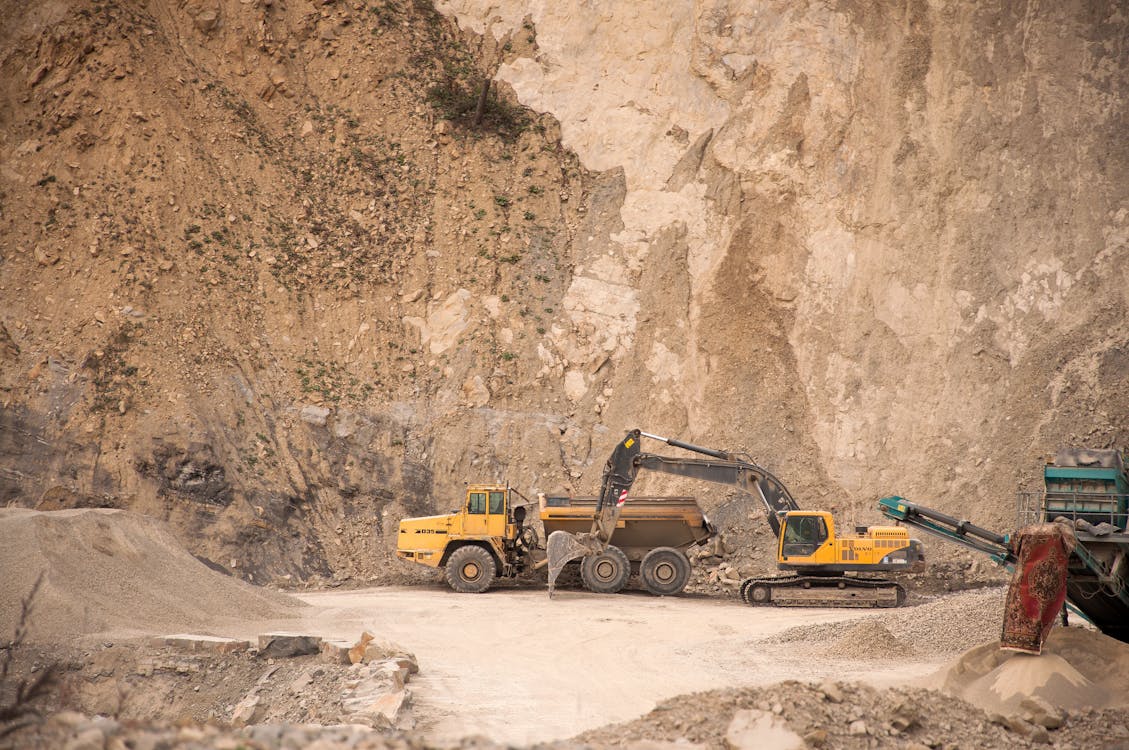
When originally one stakes a claim the big question is, "Is there any gold there?" If so "where do I look?" That's the reason why we have prospectors. People who go out in search of gold, silver, copper and so forth. There is a old saying and that is "Gold is where you find it." Truer words never spoken. But learning where to look is the big secret. First Things First
When going out to your claims some things you will want to make sure to take along. Because claims are out in the country away from civilization most of the time it is good to be prepared. Rule of the wilderness. Prepare for the worst. Make sure you have a good spare tire and jumper cables. We take one of those solar chargers that you plug into the lighter to keep your battery charged. Out in the bush with a dead battery can be deadly. A spare fan belt and some spare fluids like coolant, oils etc. along with some mechanical Prospecting Tools is a must.
Secondly, it's a good thing to build a checklist of items you will need. Even though we try to go with a buddy it doesn't always work that way and we find ourselves heading out alone. Firstly, get a small backpack to stuff things in. We always carry a first aid kit. The key to remember here is to always be prepared. Make sure you take an extra pair of clothes, especially socks and a spare pair of boots. When wearing boots it's always a good idea to wear ones with a firm ankle support. Walking over river rocks is a sure way to sprain an ankle. Gloves are handy. You would be surprised just how fast you will get a blister if you haven't been working a shovel.
Always carry matches / lighter of a flint starter in a pack back. A really handy idea is to pack along a zip lock bag with dryer lint. You know the lint that collects on the screen in a clothes dryer. That is the best fire starter you can get and it's lightweight. Also some high energy bars for that just in case along with water and water purification tablets. We also take a GPS just in case. A GPS is also handy for finding your boundaries and for recording findings that you can place on a map. We also carry a "find me spot" that will alert others if we are in distress. A good idea is to throw in an old-fashioned compass. GPS's need batteries and when you are out in the middle of nowhere you won't find a battery when you need it. Don't depend on cell phones. A flashlight is a handy item along with a good hunting knife and a few all-purpose pocket Prospecting Tools can sure come in handy also.
When heading out to into the bush or wilderness one can come upon wildlife quite a bit. If you are going into bear country this brings up another situation to be aware of. Always carry a can of bear spray or if possible even a weapon such a defender. Bear bangers do work OK also as we have had to use them on occasion. In desert areas a snake bite kit is important also. Your list of essentials may be much larger than this but we feel this is the basics for heading out. Also, be sure to tell others where you are going and an expected time you plan to be back.

Ok, here is a quick list of what we think are MUST HAVE things to stuff into that backpack. You can always add to this list but these are what we feel are essential.
When to tools for prospecting, try to keep equipment to a minimum. Remember that whatever you pack into the bush, you have to pack back out. Just look back up the page and see what all you are putting into a backpack. Now you will be adding some additional weight. You will find that prospecting is hard work. You will be using muscles you never knew you had.
Anyhow, the most important items you will need is a small spade, a small pick and a gold pan. Most people now use plastic gold pans because they a light weight and they quite durable. If you have a creek that flows well you can bring along a small ground sluice that you can set up in the water and shovel into. You will also want to bring along a small snuffer bottle, a few small plastic type of containers to out your cons in and a small tweezer. Remember the idea here is to prospect your ground. Not mine it. You want to find where the best area are first, then go in and mine that area.

Blue River is starting a placer mine operation What's really interesting with Blue River Resources is not only "where" they are working, but "how" they are incorporating a different technolgy to finding gold. (We'll get to that in a moment).
But first a bit of information for those who are not familiar with placer mining. Placer mining is the type of mining that is done by sluicing or washing gold bearing material. Unlike hard rock mining where drilling and blasting and crushing is done, placer mining is a fairly simple system and in fact the principles of the extracting gold have not really changed in the past few thousand years. Whenever you see someone panning for gold, that's a simple form of placer mining. No chemicals are used in the process, just water and in a most cases today the water being used is recycled over and over with only minor amounts of fresh water added.
So back to Blue River and the "where". Well the country they are working in to develope this placer operation is Cambodia. When I first heard Cambodia I was very much surprised because it's one of those places we or at least me never thinks about but after reading over some of the information on this project all I could say was WOW.

Blue River's project is the Okalla West Gold project and is located in the Banlung exploration tenement which is located 450 km north-east of the national capital city of Phnom Penh in the Province of Ratanakiri. This tenement is owned by Angkor Gold and Blue River initially has the right to earn in up to a 50% interest from Angkor Gold Corp. after the completion of a total investment of US$3.5 million in exploration expenditures over a 4-year period. After that time Blue River can then exercise their option for an additional 20% interest. The entire tenement covers an area of 150 square kilometers but the area that Blue River is focusing it's work on is an area of about 4.5 square kiometers where visible gold grains were found in 83% of the samples.
Exploration in October 2015 discovered a 2 square kilometer surface gold anomaly that has recently been expanded to a 4 square kilometer mineralized zone from work conducted in April 2016. Work to date indicates the potential for a significant gold deposit of 400,000 to 800,000 ounces grading 1.5 gr/tonne. The real bonus here for this project is that with this alluvial ground the depths here are only about 6 meters to bedrock which would mean a very minimal strip ratio. In cases where you find gold at surface you could very well process all the material from surface on down to bedrock.
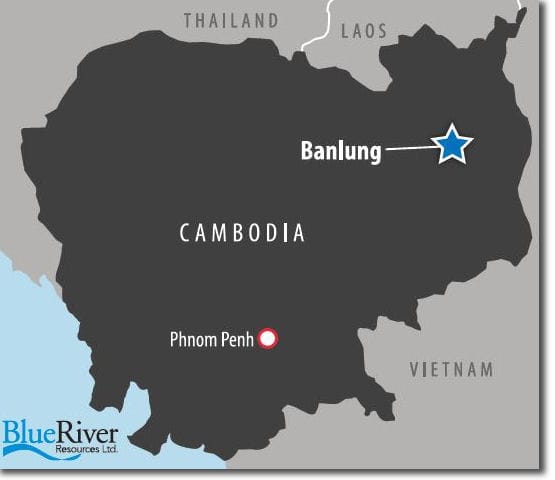
As of today, August 26, 2016 the company issued a news release stating that a shallow drilling program has commenced on the Okalla West. 250 shallow drill holes have been completed to date, of a total of 1200 holes to be drilled. The drill samples will be submitted to ALSs and results will be reported when received.
Some Interesting Prospecting
So how was this alluvial deposit actually found? A quick review of what was said earlier was that this deposit is already quite profitable to be mined. Gold average of 1.5 grams per tonne. There had been some French and Russian geology reports and maps from the 1970's to 1990's and there was even an old French exploration journal from 1894 that mentions mafic gabbro rocks south-west of Banlung as being "auriferous", without mentioning any specific location.
Then during 2015-2015 there was project for some sampling and mapping and even some termite mound survey (TMS) geochemistry. The geochemistry survey of 12,550 termite mound sites (25,100 samples), led to the discovery of anomalous gold in 26% of the pan-concentrates in this first survey. This percentage increased to 83% of samples containing visible gold in the Okalla West prospect area, located in the central-east of the intrusive complex and the focus of the second phase of termite mound sampling. The gold index anomaly discovery in the first round of termite mound samples, prompted the investigation of a further 4,240 termite mounds in the Okalla West prospect area in late 2015 The infill TMS was done on a 100m x 100m grid spacing with a 25m sample corridor, to better define the first phase pan-concentrate gold anomaly.
The discovery of the gold in the pan-concentrates also prompted further research, using heavy mineral separation (HMS) and scanning electron microscope imaging, conducted through a mutually reciprocal work agreement with researchers from the Canadian Museum of Nature, with the aim of identifying the source of the gold. This study showed the presence of both angular and rounded gold grains (up to 1.1mm), from the same sample locations. Leading to a conclusion of the possibility of both proximal (vein) and distal (sedimentary/placer) gold sources overlapping in the Okalla West gold anomaly area.
Blue River Copper
Aside from the company's Cambodia gold play, Blue River is also involved in 2 copper plays. One of those plays, the Mazama Copper Project is Washington state and the other, the Castle Copper Project is in British Columbia. The Castle Project is approximately 25 kilometers north of Copper Mountain Mining, a mid-tier copper producer that commenced production in June 2011. The Castle Copper project mining claims total 8,000 hectares (20,000 acres) and is one of the largest land positions in this highly prospective area. Blue River conducted a 3,500 ft. diamond drill program in 2011, resulting in copper mineralization in eight of the nine holes, with one intersection of 600 ft. grading 0.04% copper and 120 ft. grading 0.16% copper. These results were very encouraging, indicating the potential for a large mineralized system on the Castle Project.
Both of these projects lie within the famous Quesnel Trough Copper Belt that runs through central BC into northern Washington. The Quesnel Trough is recognized as one of the largest copper belts in the world, trending for over 2000 kilometers. This copper belt currently hosts 8 producing copper mines and numerous other copper deposits.
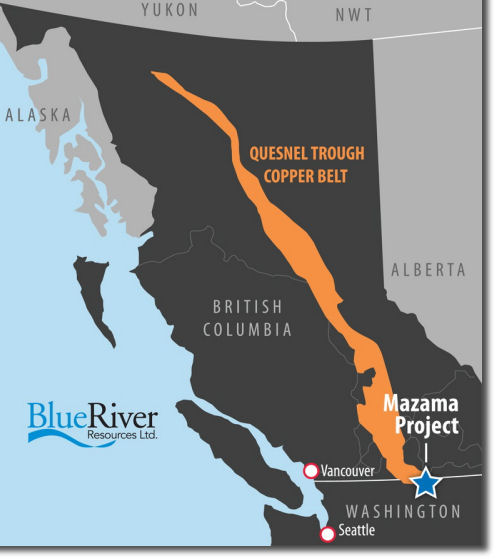
Overall Summary
Today there are thousands of junior mining companies to invest in. With the recent rebound in metals and gold in particular, investor taste for these kinds of investments have turned positive. Prudent and contrairian investors know all too well that these kind of investments run in cycles. Knowing these cycles there is no doubt that the world has seen the bottom of the bear cycle and the time to look at investing in these types of investments is now. Investors who understand this will be active in evaluating companies and projects that have a lot of positives and this is a catagory that Blue River Resources is in.
Here is some good reasons to have Blue River Resources on your investing radar.
Great copper exposure in mining friendly jurisdictions
If you enjoyed this article, please feel free to share. When seeking out mining stocks always use Due Diligence and see our Disclaimer and be sure to sign up for our free news letter located on the right hand side of this page.
A Pure Silver Play In Nevada Right now at this time most eye blackrock silver balls are looking at Newfoundland and watching as how activity unfolds out that way. You got the big TSX-V:NFG Newfound Gold story going on plus a bunch of others that are right in the same area all drilling away and dishing out the news that investors like to hear. However there is another area that is totally under the radar to a lot investors at this time and that is Nevada. Right now there is a LOT of activity on the go in the big silver state and some juniors are starting to get noticed.
One of these juniors is a company called Blackrock Silver TSX-V:BRC. The company just did a name change from from Blackrock Gold in mid March of 2021 to better reflect the silver dominant nature of it's flagship Tonopah West silver-gold project located in the Walker Lane trend. This trend, located in the Tonopah West district is one of the largest historic silver districts in North America, producing 174m ozs Ag, 1.8m ozs Au. Blackrock also has an area known as
Tonopah West
The Tonopah West package consists of 100 patented & 19 unpatented mining claims covering 4.5sq km which is about 1,135 acres and is the largest claim package in Tonopah silver district while the Silver Cloud land package consists of 572 mining claims covering 45sq km or about 12,000 acres. Both of these land packages are owned 100% by the company. The Tonopah west claims have a lot of underground workings which are located on 4 main levels of 800, 1200, 1540 & 1880. There is a total of 55 KM of underground workings.In 2020 the company did a total of 30,000 meters of RC & Core drilling and this year the drill program has been expanded upward to 40,000 meters. The 2021 program is already underway with 4 drills at site with expectations drilling the 40,000 meters or even more with both core and RC drilling. The aim is to deliver a maiden resource estimate by the fourth quarter of this year. Assays from 2020 drilling highlight +40 significant intercepts ranging from 1 meter to 29 metres in thickness with grades from 200 g/t to 4,643 g/t AgEq (up to 26 g/t gold, 2,029 g/t silver).
Silver Cloud In Blackrock Silver
The Silver Cloud project is named after the past producing Silver Cloud gold mine where past high-grade intercepts were encountered by Teck and Placer Dome. This land package consists of 572 mining claims covering 45sq km and is centered on the Northern Nevada Rift adjacent to Heclas Hollister mine. The property has an old mercury mine and with 8 new veins discovered at surface on this property, the company has now a few priority targets for exploration.
There is 165 million shares fully diluted and with a new 10 million dollar financing in May with First Majestic TSX-FR the company is well financed for a good round of drilling. Share price has a 15 cent low and $1.60 high over the past 52 weeks.
If you enjoyed this article, please feel free to share. When seeking out mining stocks always use Due Diligence and see our Disclaimer and be sure to sign up for our free news letter located on the right hand side of this page.
Added note: The author of this article holds postions in the above company at the time of this writing. The author may buy or sell any time going forward.
 Great copper exposure in mining friendly jurisdictions


